Chinese : variant spelling of Deng.Chinese : from the name of the region of Tang, in
present-day Shanxi province. The legendary emperor Huang Di
(2697–2595 bc) granted this region to his son Dan Zhu,
whose descendants eventually adopted it as their surname. They held
power in the region until they were conquered by Cheng Wang, second
king (1115–1079 bc) of the Zhou dynasty. Cheng Wang granted
the region to his brother Shu Yu, whose descendants also adopted the
place name Tang as a surname. This character is also that used for the
Tang dynasty (618–907).Chinese : from the
given name of Cheng Tang, Prince of Shang, a model of virtue and
humanity, who overthrew the corrupt last king of the Xia Dynasty and
became first emperor of the Shang Dynasty, in 1766 bc. Some
of his descendants adopted Tang as their surname.Chinese
: Cantonese variant of Teng. ML 1.Vietnamese: unexplained.Korean: only one Chinese character is
used in Korean for the surname Tang, and the Miryang is the only Tang
clan. Its founding ancestor, Tang Song, migrated from Yüan China
some time during the latter part of the 14th century. This is a
comparatively rare surname in Korea.
Dictionary of American Family Names, Oxford University Press, ISBN 0-19-508137-4
49,423
Historical Documents & Family Trees with Tang
The information for this chart came from the U.S. Immigration Collection at Ancestry.co.uk.
You can find out where the majority of the Tang families were living before
they immigrated to the U.S and learn where to focus your search for foreign records.
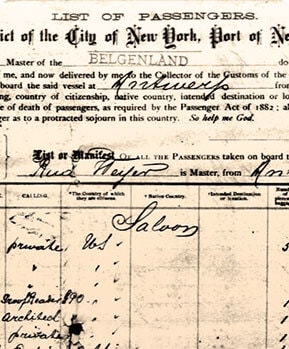
Immigration records can tell you an ancestor's name, ship name, port of departure,
port of arrival, and destination.
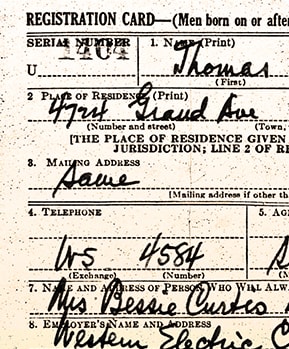
Did the Tangs fight in a war? Military records can tell you a lot
about your ancestors including birthplace, occupation and even physical descriptions.
Starting a family tree at Ancestry is not only the easiest way to organise, preserve
and share your family history, it's also a direct link to missing information about
your roots.